Your first time driving alone is easier with preparation. Plan a short, familiar route at a quiet time, check the car before you set off and breathe out slowly before you pull away. Focus on one task at a time. Nerves are normal, and they ease with each drive.
Key takeaways
- Feeling nervous on your first solo drive is common, and preparation reduces it.
- Sort insurance, tax, MOT and your licence before you go, not at the kerb.
- Choose a short route you already know, at a quiet time of day.
- Make your first drive about one thing only: getting there safely.
- Build up gradually. Add busier roads, darkness and motorways one at a time.
Why does driving alone feel so different?
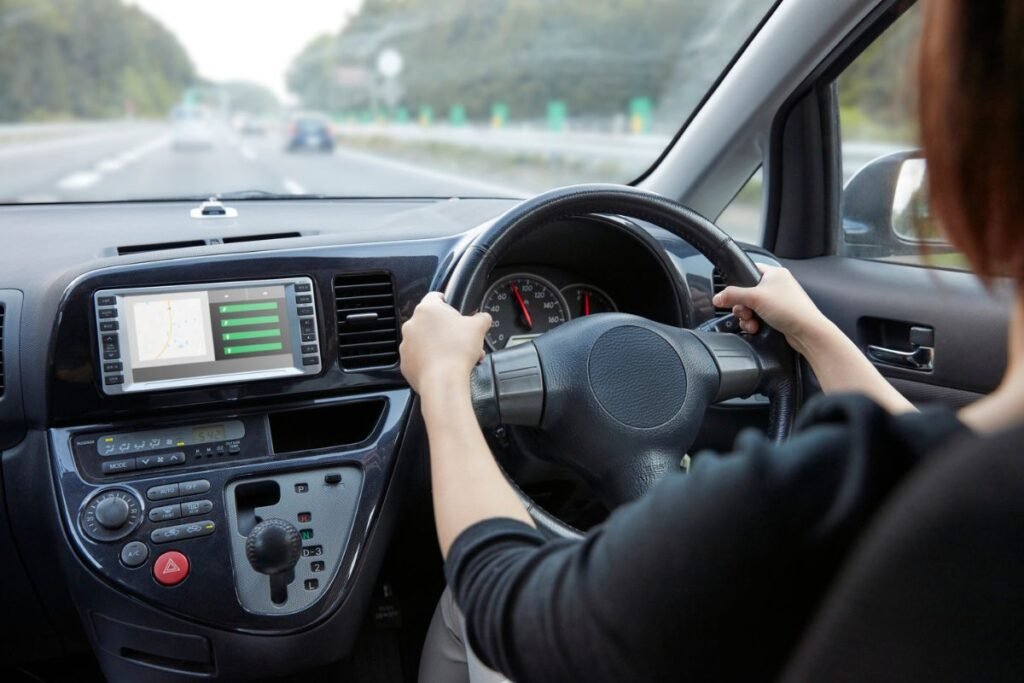
It feels different because nobody is beside you to catch a mistake or give an instruction. Every decision is yours. If you are driving alone for the first time after passing, that is a big step, even though you have already proved you can drive.
Your skills have not changed since your last lesson. What has changed is the pressure. Once you recognise that, you can deal with the pressure directly instead of doubting your ability.
What should you check before driving alone?
Check the legal and practical basics first, because worrying about them in the car adds to nerves. Do this at home, not on the driveway with the engine running.
- Insurance. You must be insured to drive. Confirm that your cover applies to you as a full licence holder and that it has started.
- Tax and MOT. The car must be taxed and, if it is old enough, have a valid MOT. You can check both on gov.uk.
- Your licence. You can start driving straight away after passing your test. Check gov.uk for how to get your full licence.
- Plates. Remove or cover your L plates before you drive.
- The car. Adjust the seat, mirrors and steering wheel. If it is not the car you learned in, sit in it for a few minutes first. Find the lights, wipers, demister and hazard switch by touch.
- Your phone. Set your sat nav before you move. It is illegal to hold and use a phone while driving.
If you can, set up the car the day before. Familiar controls are one less thing to think about.
How do you choose a first solo drive route?
Choose a short route you already know, at a time when roads are quiet. A route you have driven many times with an instructor or supervisor removes guesswork.
Good choices:
- A 10 to 15 minute loop on roads you know well.
- Mid-morning or early evening, outside the school run and rush hour.
- Daylight and dry weather, if you can choose.
- A route with a safe place to stop if you need a break.
For now, avoid unfamiliar junctions, long journeys, motorways and night driving. Your first solo drive is a confidence builder, not a test.
How do you stay calm when driving alone?
Treat nerves as a signal to simplify, not as a sign that you cannot drive. These techniques work because they give you something specific to do.
| If you feel… | Try this |
|---|---|
| Your heart racing before you start | Sit with the engine off and breathe out slowly a few times. Start when you are ready. |
| Tense shoulders and a tight grip | Loosen your hands on the wheel and drop your shoulders. Check your seat position. |
| Overwhelmed by traffic | Leave a bigger gap. The Highway Code says to allow at least a two-second gap on roads carrying faster-moving traffic, and at least double that on wet roads. |
| Pressure from a car behind | Keep your speed and your gap. Let them pass when it is safe. |
| Lost or unsure of the route | Indicate, stop in a safe place, check your sat nav, then carry on. |
| Distracted by your thoughts | Say what you see out loud, such as “cyclist on the left, car pulling out ahead”. This brings your attention back to the road. |
If you stall in a manual car, apply the handbrake, select neutral, restart and carry on. You did this in lessons, and a stall does not mean you have forgotten how to drive.
What should you do if you make a mistake?
Small mistakes are normal for any nervous new driver. Missing a turn, hesitating at a roundabout and stalling are all common. What matters is how you respond.
- Missed a turn? Do not brake or swerve. Carry on and take the next safe route, or turn around when it is safe.
- Hesitated at a junction? Wait until you are sure it is safe. A late, calm decision is better than a rushed one.
- Someone sounded their horn? Stay focused on your own driving, not their reaction.
- Feeling a wobble of panic? Find a safe place and stop. Take two minutes, then carry on.
After the drive, note one thing that went well and one thing to improve. This keeps your confidence realistic.
How does driving alone work in Birmingham?
Start with quiet roads near where you live and build up to busier areas. Birmingham city centre is busy, with buses, cyclists and pedestrians sharing the road. Save it for a later drive, once your confidence is higher.
If you would like supervised practice in busier conditions first, our driving lessons in Birmingham run from 8 AM to 10 PM, seven days a week. That includes evening lessons, which is useful if you want to practise in the dark before you drive alone at those times.
How do you build confidence after the first drive?
Add one new challenge at a time, not several at once. After your first short drive, repeat it until it feels easy. These new driver tips keep progress steady:
- Week one: Repeat your short, familiar route. Aim for calm, not speed.
- Next: Try a slightly longer route or a busier road, still in daylight.
- Then: Drive in the dark or in rain, on roads you know.
- Later: Try a dual carriageway or motorway. Once you have passed, there is no learner restriction on motorways.
- Ongoing: Review each drive and notice what is getting easier. Our driving tips for beginners are a useful refresher.
Some new drivers choose extra training. Pass Plus is an optional course with six modules: in town, in all weathers, on rural roads, at night, on dual carriageways and on motorways. It takes at least six hours, and you are assessed throughout rather than taking a test at the end. We offer Pass Plus in Birmingham. If you want further training later, you can also look at our advanced driving course.
Remember too that new drivers have less room for error. If you reach six or more penalty points within two years of passing, you lose your licence. This includes points you had on your provisional licence. Check gov.uk for the details.
FAQ
Is it normal to be a nervous new driver?
Yes. Many new drivers feel nervous because no instructor is beside them. If anxiety feels overwhelming or stops you driving at all, speak to your GP as well as your instructor.
Should I have a passenger on my first drive?
You may feel more comfortable with a calm passenger, but a chatty one can distract you. If you take someone, ask them to stay quiet while you drive.
How soon can I drive after passing my test?
You can start driving straight away, as long as your insurance is in place. Check gov.uk for what to do about your full licence.
Do penalty points from my provisional licence count?
Yes. Unexpired points on your provisional licence carry over to your full licence. They count towards the six-point limit in your first two years.
Need extra support?
Call us on 07785 602008 or send the booking form. See our driving lessons in Birmingham page for areas and details, or read about urban driving lessons in Birmingham city centre if you want to practise busy roads with an instructor beside you.