Most learners need around 45 hours of lessons with an instructor and about 22 hours of private practice, according to the DVSA. That is an average, not a rule. There is no minimum, so the answer to “how many driving lessons do you need?” depends on your starting point, how often you drive and how much you practise between lessons.
Key takeaways
- The DVSA average is about 45 hours of professional lessons plus 22 hours of private practice.
- There is no minimum number of lessons or hours. You are ready when you drive safely and consistently.
- Private practice, lesson frequency and confidence have the biggest effect on your total.
- Both weekly and intensive lessons work if you are consistent.
- Your instructor’s assessment matters more than any average when you decide to book your test.
What is the average number of driving lessons?
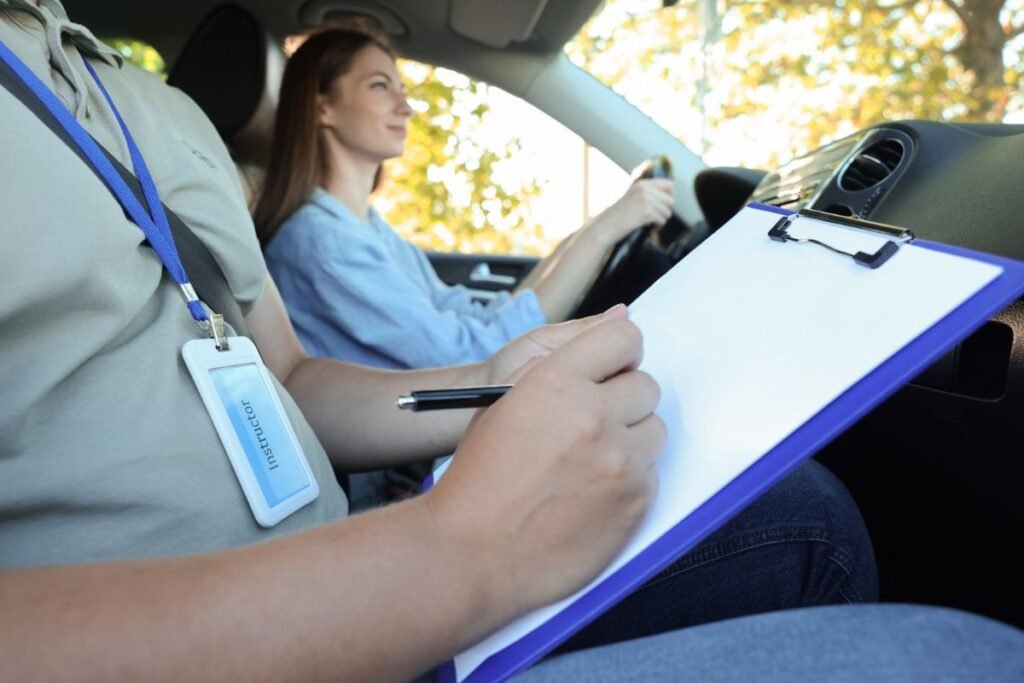
The DVSA reports that learners need about 45 hours of lessons with a driving instructor, plus 22 hours of practice with a friend or relative. If you are asking how many hours it takes to learn to drive, this is the standard answer. It is an average across all learners. Some need fewer hours and many need more.
Hours are not the same as lessons. The number of lessons depends on how long each one lasts:
| Lesson length | Lessons for 45 hours |
|---|---|
| 1 hour | 45 |
| 1.5 hours | 30 |
| 2 hours | 22.5 (so 23) |
The DVSA states that there is no minimum number of lessons you must have before taking your test. Passing is about reaching the standard, not logging time.
How many driving lessons do I need to pass?
You need as many as it takes to drive safely and consistently without prompts. Two learners with the same instructor can need very different numbers of hours.
| Factor | Why it matters |
|---|---|
| Private practice | Extra time at the wheel helps skills settle, so you repeat less in paid lessons. |
| Lesson frequency | Long gaps mean part of each lesson is spent recalling the last one. |
| Confidence | Nervous learners often need more time at junctions and roundabouts. |
| Gearbox | Manual learners also learn clutch control. Automatic learners do not, but road skills still take time. |
| Test readiness | Driving well in lessons is not always the same as driving well under test conditions. |
An exact figure is not possible before you start. A good instructor tracks your progress and gives you a realistic estimate as you go.


How do you know you are ready for the test?
You are ready when you drive consistently without help from your instructor. The DVSA’s Ready to Pass guidance breaks driving into 27 skills, each with five levels of progress. It says you are ready for the test when you consistently reach the top level for every skill.
On the test itself, you pass with no more than 15 driving faults and no serious or dangerous faults.
Signs that you are close:
- You decide at junctions and roundabouts without being told.
- You can follow road signs or a sat nav on the independent driving section.
- You complete the reversing manoeuvres calmly and safely.
- You can drive on different roads, at different times of day and in different traffic.
- Your instructor gives feedback rather than instructions.
Do not book the test just because you have reached 45 hours. Book it when your instructor agrees you are consistent. Our guide on how to pass your driving test first time in Birmingham covers preparation in more detail.
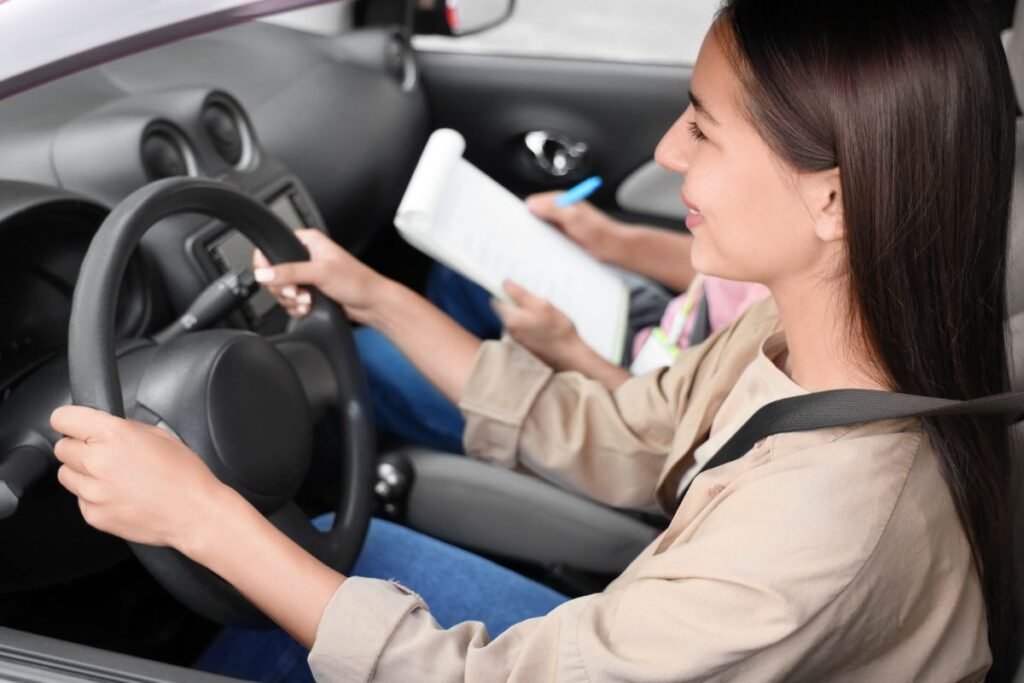
How does private practice change the number?
Private practice usually lowers the number of paid lessons you need. It gives you extra time behind the wheel, so skills become familiar sooner. The DVSA reports that learners who combine lessons with private practice are 50% more likely to pass the test.
To practise privately, you need:
- A provisional driving licence.
- A supervising driver who is at least 21, has held a full licence for at least three years, and is qualified to drive the type of car you are learning in. For example, they need a manual licence to supervise you in a manual car.
- Insurance that covers you as a learner in that car.
- L plates on the front and back of the car.
Ask your instructor what to practise. A plan works better than unplanned drives. If you found roundabouts difficult in a lesson, practise them in your next private session.
What is the cost of driving lessons in Birmingham?
Manual and automatic lessons cost the same with us. Our intensive packages work out at £34 an hour:
| Hours | Price |
|---|---|
| 5 hours | £170 |
| 10 hours | £340 |
| 15 hours | £510 |
| 20 hours | £680 |
Your total depends on how many hours you need, so no single figure fits every learner. Our pricing page sets out the current options.
Your theory test and practical test are paid for separately. Check gov.uk for the latest fees.


Should you choose weekly lessons or an intensive course?
Weekly lessons spread the cost and leave time to practise between sessions. Intensive driving lessons in Birmingham concentrate many hours into a short period, which can make it easier to build on what you learned the day before.
Weekly lessons suit learners balancing school, college or work. Intensive courses suit learners who can set aside a block of time. You can read more about intensive driving courses in Birmingham before you decide. Either way, you still need to be test-ready before you book. A short course does not replace consistency.
How should you plan your lessons in Birmingham?
Plan around where you will take your test and when you can practise. The driving test centres in Birmingham include Shirley, Kings Heath, Kingstanding, Garretts Green and South Yardley.
Official test routes are not published, so no one can tell you the exact roads you will drive. Instead, ask your instructor to practise the junctions, roundabouts and busier roads around your likely centre. Our complete guide to Birmingham driving test routes is a useful companion read.
We teach in Acocks Green, Alum Rock, Aston, Balsall Heath, Bordesley, Digbeth, Edgbaston, Hall Green, Jewellery Quarter, Kings Heath, Ladywood, Olton, Shirley, Small Heath, Solihull, Sparkhill and Birmingham city centre. Lessons run from 8 AM to 10 PM, seven days a week.
A simple plan to follow:
- Apply for your provisional licence. You can apply from 15 years and 9 months old, and start learning to drive a car at 17.
- Book your first lessons and tell your instructor your goal.
- Ask for a progress review every 10 hours or so.
- Add private practice, guided by your instructor’s plan.
- Pass your theory test. You need to pass it before you can book your practical test.
- Book your practical test when your instructor agrees you are ready.

FAQ
Is 20 hours of driving lessons enough?
For most learners, no. The DVSA average is about 45 hours of professional lessons. Some learners pass with fewer, usually with substantial private practice. Your instructor can tell you how close you are.
Do I need to pass my theory test before I start lessons?
No. You need a provisional licence to start lessons. You must pass the theory test before you can book your practical test.
How many driving lessons a week should I have?
There is no official figure. Regular lessons help you retain what you have learned, so choose a pattern you can keep up. Talk to your instructor about your timetable, and consider an intensive course if you can commit a block of time.
What if I need more lessons than the average?
Many learners do. The DVSA figure is an average, so a large number of learners need more than 45 hours. It is not a sign that you are falling behind. Ask your instructor which skills to focus on next.
Start your lessons
Call us on 07785 602008 or send the booking form. See our driving lessons in Birmingham page for areas and details, or read about learning to drive in Kings Heath if you plan to test there.